Platform
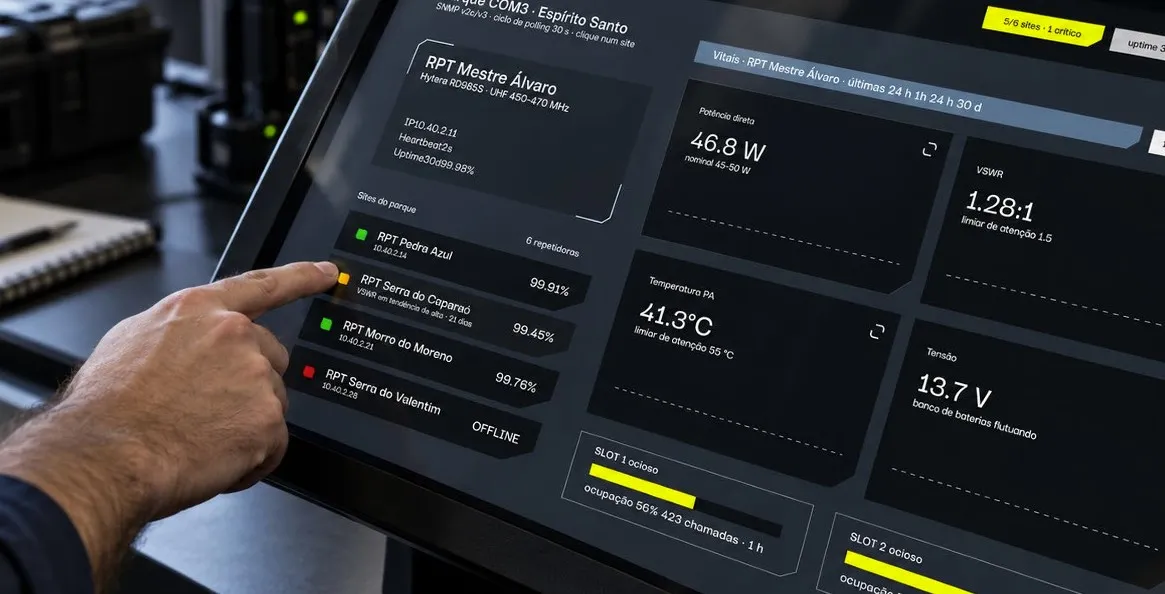
Maps, topology and alarms on one screen
Availability, latency, packet loss and bandwidth usage gathered in a web dashboard, with topology, dependencies between assets and history for trend and capacity analysis.
- Topology
- Maps
- Alarms
Monitor links, equipment, private networks and terrestrial or satellite connectivity in real time, with maps, topology, history and centralized alarms. See the failure before it stops the operation.



























Critical networks combine equipment, links and technologies from different vendors. Without a unified view, failures are noticed late, diagnostics require multiple tools, and the team wastes time tracking down the source of an outage. NMS.ONE turns a heterogeneous infrastructure into an observable, manageable operation.
Availability, latency, packet loss and bandwidth usage gathered in a web dashboard, with topology, dependencies between assets and history for trend and capacity analysis.

Industries, mining operations, highways, providers and distributed operations monitored by the same platform.
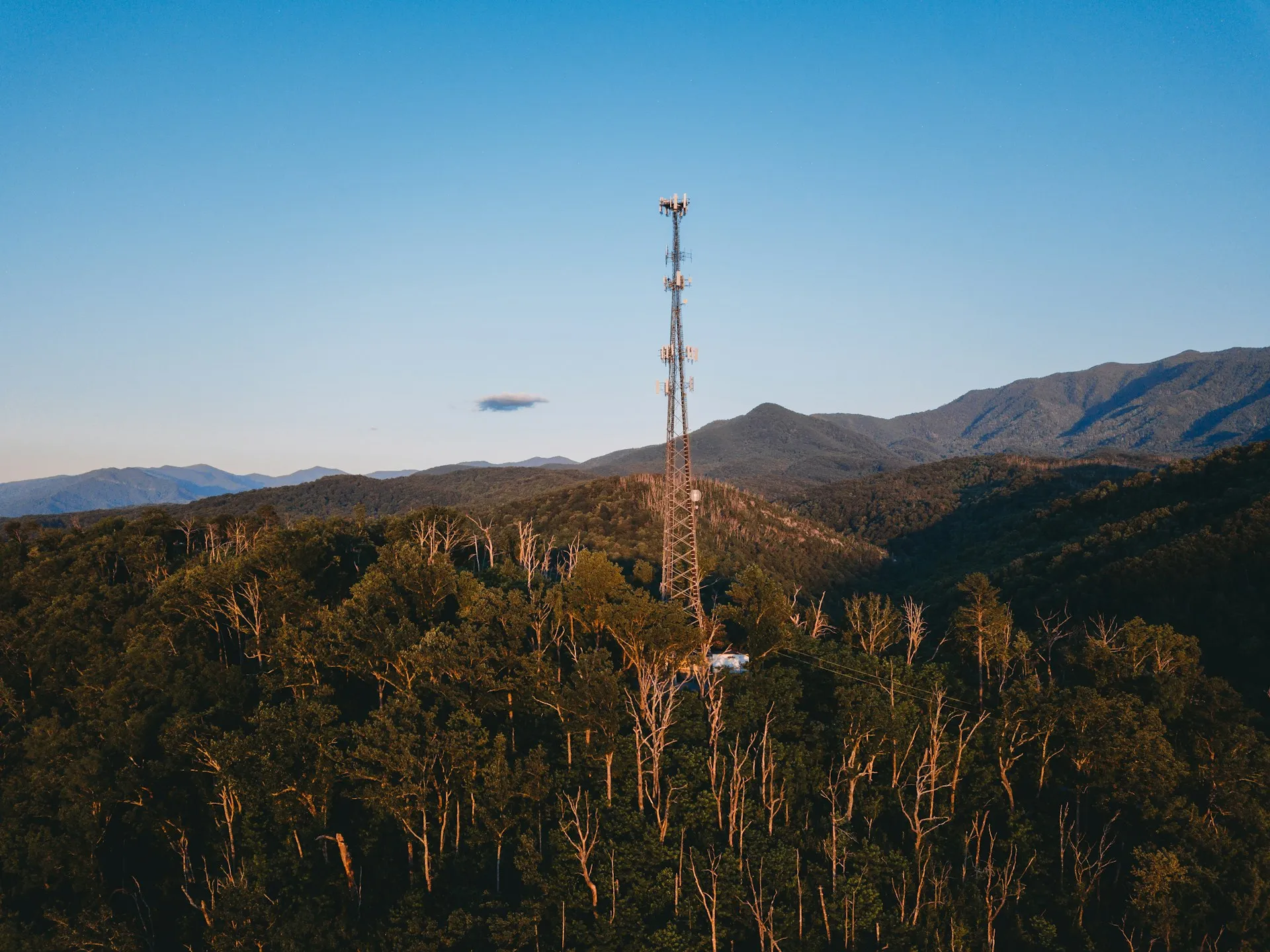
Routers, switches, firewalls, access points, servers, radios, microwave links, fiber optics and LTE/5G networks integrated in one common layer.

Converging links in the same view, including satellite connectivity such as Starlink and Amazon Leo, subject to each service's interface and data availability.
NMS.ONE collects data from equipment and links across different vendors, correlates performance, history and alarms, and delivers maps, topology and indicators ready for the operation — 24/7.
Collection via SNMP, ICMP, Syslog, APIs, MQTT and NetFlow across routers, switches, firewalls, access points and servers, plus radios, microwave links, fiber optics and LTE/5G networks. Equipment and services from different manufacturers start speaking the same language.
Links, private networks and satellite connectivity — including Starlink and Amazon Leo, subject to interface and data availability — tracked side by side, with signal strength, link quality and service stability.
Availability, latency, packet loss and bandwidth usage in web dashboards, with maps, topology and dependencies between assets and connections. History and indicators support trend and capacity analysis.
Alarms for failure, degradation, unavailability or a configured threshold, correlated with current and historical performance. The platform shows the affected point and its impact on the topology, reducing mean time to identify and respond.
Everything you need to know before bringing NMS.ONE to your network operation.
It's a network infrastructure monitoring platform. Links, equipment, private networks and terrestrial or satellite connectivity are tracked in real time in a single view, with maps, topology, history and centralized alarms in the same environment.
Critical networks combine equipment, links and technologies from different vendors. Without a unified view, failures are noticed late, diagnostics require multiple tools, and the team wastes time tracking down the source of an outage. NMS.ONE turns a heterogeneous infrastructure into an observable, manageable operation.
Collection is multiprotocol, covering both equipment status and traffic behavior:
No. The platform integrates routers, switches, firewalls, access points, servers, radios, microwave links, fiber optics and LTE/5G networks from different manufacturers, making use of the infrastructure already installed. The idea is to add a common layer over what exists, not to rebuild your fleet.
The indicators arrive ready to track the behavior of each asset and the link that supports it:
Alarms are triggered by failure, degradation, unavailability or a configured threshold, and are centralized in one place. The platform correlates current performance with history and related alarms, so the team can act on degradation before it becomes a full outage.
Instead of opening several tools, the team sees the affected point and its impact on the topology:
Yes. Besides terrestrial links, NMS.ONE tracks satellite connectivity, including Starlink and Amazon Leo, subject to each service's interface and data availability. Terrestrial and satellite links appear in the same view, making it easier to compare paths and understand the behavior of sites with converged connectivity.
In environments that depend on links and equipment essential to operational continuity:
The platform is built for dispersed infrastructure. Tracking by map, by site and by topology keeps every point visible even when it's far from the operation's center, and degradation alarms flag the problem before anyone has to travel without knowing what they'll find.
Yes. History and indicators are preserved for trend analysis, capacity planning and incident investigation, letting you compare periods and back decisions about links and equipment with data from your own operation.
Yes. The same environment scales by site, network, customer, region and technology, without rebuilding what's already in production. A pilot with a handful of links and an infrastructure spread across several regions live on the same platform.
No. The dashboard is built for direct operational use: map, topology, indicators, history and alarms on a single screen, with a quick view of what matters to whoever tracks the network day to day.
Access is controlled end to end and every event is logged:

Monitoring platform that brings together links, equipment, private networks and terrestrial or satellite connectivity in a single view, with maps, topology, history and centralized alarms.
Governance and documents
COM3 OUTSOURCING & PROJECTS LTDA · CNPJ: 41.713.237/0001-05
© 2026 NMS.ONE™ · All rights reserved. ·